INDEPENDENT FIELD ARCHIVE TOPIC FILE / ASTROBIOLOGY & SEARCHBACK TO FIELD ARCHIVE
ALIEN CONTACTFIELD ARCHIVE / LIFE ALL OPEN FILES
Earth viewed from orbit against black space, an illustrative image

ASTROBIOLOGY / WORLDS / LIFE

LIFE
BEYOND EARTH.

A serious scientific search across planets, moons, chemistry, and the stars. The possibility is open; a detection has not yet been confirmed.

NASA / ASTROBIOLOGYSOLAR SYSTEM & BEYONDTOPIC 003
SEARCH
IN PROGRESS
EARTH / NASA VISUAL VIA UNSPLASH / NOT AN EXOPLANET
OVERVIEWSEARCH METHODSMILESTONESTHE EVIDENCESOURCES
THE SHORT VERSIONAC / TOPIC 003

Life beyond Earth is a scientific question, not a confirmed discovery. NASA states that no life beyond Earth has yet been found and no evidence shows alien life has visited our planet.

Astrobiology studies the origin, evolution, and distribution of life in the universe. That work spans the chemistry of life, extreme environments on Earth, ancient habitability on Mars, potentially ocean-bearing moons, exoplanet atmospheres, and possible signals from technological civilizations. Different questions require different instruments and different standards of evidence.

Thousands of planets are known beyond our solar system, and many more likely exist. A planet in a “habitable zone” is not a planet known to be inhabited. Even a potentially interesting chemical signature would need careful follow-up to distinguish biology from non-biological processes, instrument effects, and contamination.

Reading the file: The existence of planets and potentially habitable environments is established. Life elsewhere, intelligent or microbial, remains unconfirmed.

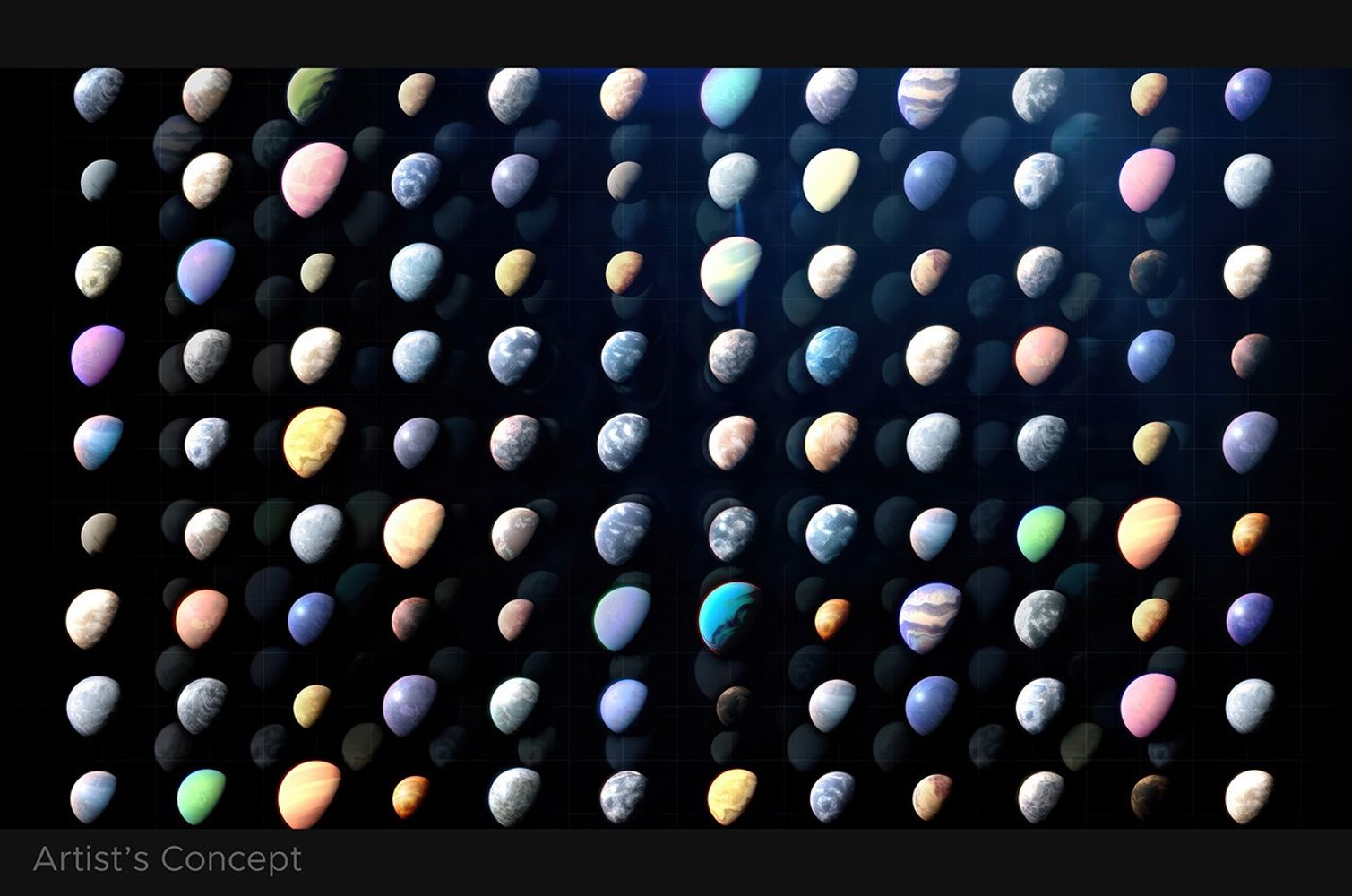
NASA artist concepts representing diverse confirmed exoplanets, not direct photographs
ARTIST CONCEPTS / NASA EXOPLANET COLLECTION
FIELD NOTE 03

A world can be confirmed. Its life, if any, is a separate question.

PLANET DISCOVERY / HABITABILITY / LIFE DETECTION

02 / SEARCH MILESTONES

FROM OTHER
WORLDS
TO OTHER LIFE.

Astronomers first had to establish that planets orbit other stars. Finding life is a harder, separate step.

A planet around a Sun-like star

Astronomers announced the discovery of 51 Pegasi b, the first planet found orbiting a Sun-like star. It demonstrated that planets beyond our solar system were observable realities, rather than an idea awaiting evidence.

EXOPLANET ASTRONOMY

Kepler opens a wider census

NASA's Kepler mission measured tiny, repeated dips in starlight as planets crossed in front of their stars. The method revealed that planets are common and gave researchers a much larger sample for comparing sizes, orbits, and planetary systems.

NASA / KEPLER

TESS searches the nearby sky

The Transiting Exoplanet Survey Satellite began surveying bright nearby stars for transiting planets. Confirmed worlds can be prioritized for follow-up observations, including measurements that may reveal properties of their atmospheres.

NASA / TESS

More than six thousand exoplanets

NASA's public catalog has passed 6,000 confirmed exoplanets, with additional candidates awaiting confirmation. The tally records planets, not inhabited planets. The search for chemical or technological evidence of life continues independently.

NASA / LIVE CATALOG COUNT

03 / CLAIM VS. CHECK

WHAT WOULD
COUNT AS EVIDENCE?

Move from an interesting possibility to a supported conclusion through measurements other researchers can examine.

OBSERVATIONWHAT IT CAN SHOWWHAT IT DOES NOT PROVE ALONE
A potentially habitable planet

That measured properties such as size, orbit, or stellar environment make a world worth studying for habitability.

That the planet has life, liquid water at its surface, or conditions identical to Earth.

An atmospheric molecule

That an instrument's spectrum is consistent with a chemical under particular observing and modeling assumptions.

That life made it. Geological chemistry, clouds, instrument effects, and other mechanisms must be evaluated.

A candidate signal

That a signal deserves checking against the instrument, observing schedule, sky position, and other facilities.

That it came from an extraterrestrial intelligence before interference and natural explanations are excluded.

A confirmed detection

A claim supported by robust, independently reviewable evidence and converging lines of measurement.

Any specific form or history of life beyond what the evidence directly establishes.

IMPORTANT DISTINCTIONThe universe may contain life. That is a scientific possibility, not yet an observed fact. No confirmed discovery of extraterrestrial life has been announced.

READING THE FILE

SOURCES &
FURTHER READING.

The number of confirmed exoplanets changes as the catalog is updated. The discovery of a planet or a potentially habitable environment is not a life detection.

STAY CURIOUS.
ASK WHAT CAN BE CHECKED.

← RETURN TO THE FIELD ARCHIVE